
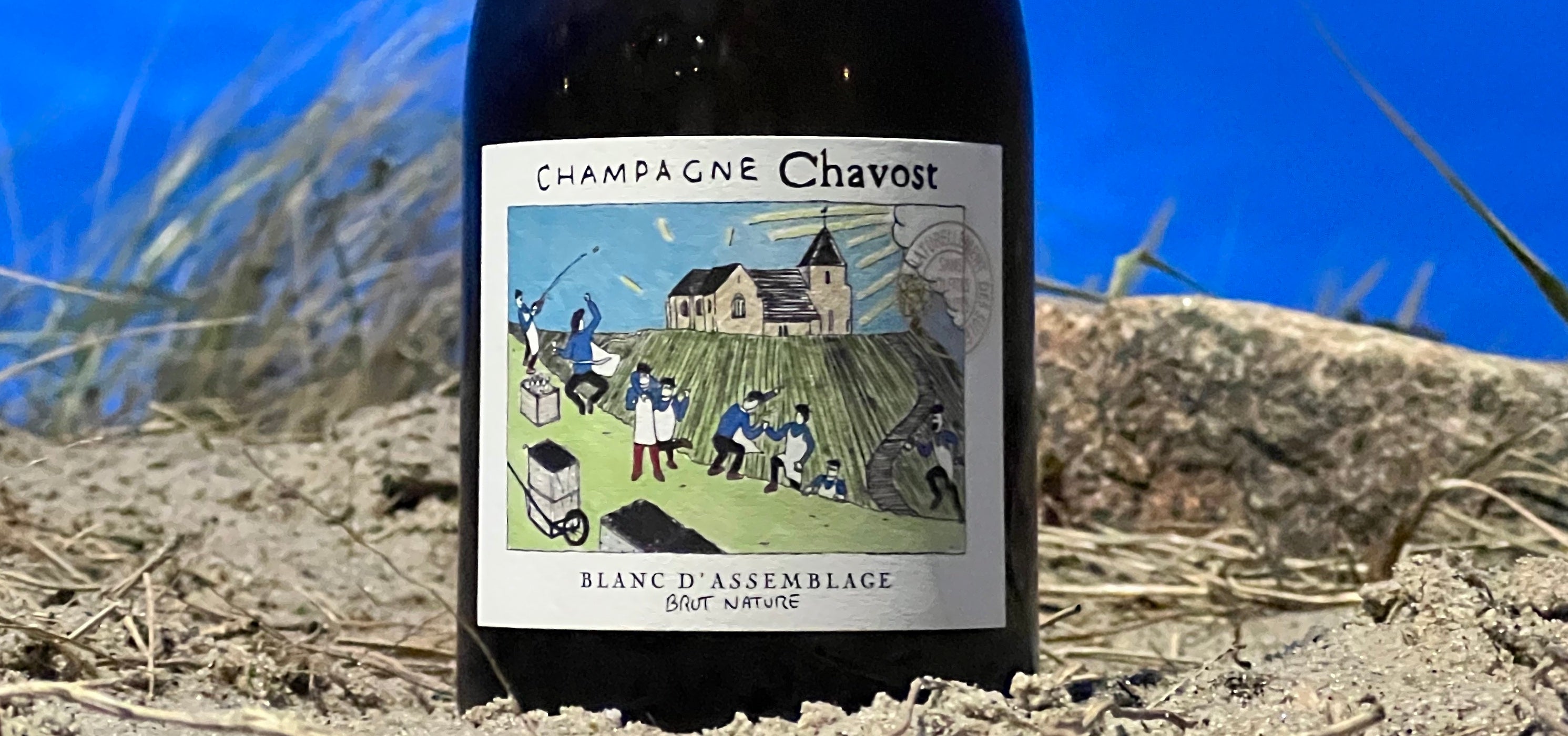
Buy Grower Champagne




Blanc de Chardonnay
Chavost Champagne
100% Chardonnay with no additions


Chemin des Terroir
De Sousa Champagne
Scrumptious ! Walnuts, Dried Fig, Brioche


Rosé Brut Nature
Chavost Champagne
Pinot Noir + Pinot Meunier Rose Fizz


Blanc de Meunier
Chavost Champagne
Pinot Meunier... 100% !!!


Blanc de Noirs 2019
Rémi Leroy Champagne
100% Pinot Noir


Latitude Blanc De Blancs Extra Brut
Larmandier Bernier
40% Perpetual Reserve


Puzzle (ONE PER ORDER)
Ruppert Leroy Champagne
Zero Zero. 70% Chard. 30% Pinot


Brut Nature
Rémi Leroy Champagne
Stunning. Let it open up
What Is Grower Champagne?
Grower Champagne is Champagne made by the same family that grows the grapes. They farm their own vineyards, make the wine in their own cellar and put their own name on the bottle. In French they are called récoltants-manipulants, and you can spot them by the small letters RM on the label.
Most of the Champagne on supermarket shelves works differently. It comes from négociant houses, marked NM on the label, which buy most of their grapes from other growers. CM means a co-operative, where many growers pool their grapes under one brand.
Every grower Champagne on our shop is made by people working their own land without the chemicals used in most of the region. In the vineyard that usually means just copper and sulphur, plus herbal sprays for those working holistically.
Champagne Houses vs Grower Champagne
The difference in scale is enormous. Champagne has around 410 houses, 120 co-operatives and 16,460 growers. Of the 266 million bottles shipped in 2025, about 192 million came from the houses, and around 74 million from the growers and co-operatives together.
The biggest brands make millions of bottles each. Moët & Chandon has been reported at around 30 million bottles a year, and Veuve Clicquot's Yellow Label alone at around 19 million.
Yet the houses own only around 12% of the vineyards themselves, with close to 88% belonging to growers. To make that much wine, the houses work as négociants: they buy grapes from hundreds of growers and blend them into a consistent house style, which gives them far less say over how the vines are farmed.
A grower works the other way round. The wine comes from their own vines, often in one village, so they control every step from pruning to bottling, and the Champagne tastes of that place and that year.
Grower Champagne Favourites
Blanc de Chardonnay
Chavost Champagne
100% Chardonnay with no additions
Chemin des Terroir
De Sousa Champagne
Scrumptious ! Walnuts, Dried Fig, Brioche


Indigéne Cremant du Jura
Stéphane Tissot
Indigenous yeast 2nd fermentation!

Can Champagne Be Truly Natural?
Strictly speaking, a fully natural Champagne is very hard to make. Champagne and other classic method sparkling wines get their bubbles from a second fermentation inside the bottle. To start it, winemakers normally add a mix of yeast, yeast nutrients and sugar, called the tirage. After ageing, the yeast is removed (disgorgement), and most Champagnes are then topped up with a sweetened liquid called the dosage.
So while a grower can farm cleanly and add no sulphites, the second fermentation usually means adding yeast. A few growers have found clever ways around this.
Méthode Fabrice Pouillon
Fabrice Pouillon of R. Pouillon & Fils in Mareuil-sur-Aÿ makes his bubbles with nothing but his own grapes. At harvest he freezes part of the fresh juice from his vineyards, around 15%, and later adds it to the base wine, so the second fermentation runs on the grapes' own sugar and yeasts, with no added sugar. He has refined this "méthode Fabrice Pouillon" since 2004.
Tissot's Indigène
In the Jura, Stéphane Tissot does something similar for his Crémant du Jura Indigène. He first tried it with vin de paille, but now, instead of adding yeast, he adds partially fermenting juice from the next vintage, which carries his own native yeasts and starts the second fermentation. It takes perfect timing and some risk.
No Added Sulphur (SO2) in Champagne
Some growers go a step further and make Champagne with no added sulphur (SO2) at all. Piollot and Vincent Couche do it on some of their cuvées, and Chavost and Romain Hénin are among the others. Mouzon-Leroux, Antoine Bouvet and Fabrice Pouillon also don't always use sulphur in the cellar.
No added sulphur isn't quite the same as sulphite-free, because small amounts form naturally during fermentation, but nothing extra goes in.
Grower Champagne at MORE
Over the years we have stocked grower Champagne from Chavost, Champagne Fleury, De Sousa, Rémi Leroy, Ruppert-Leroy, Larmandier-Bernier, Tarlant, Charles Dufour and Bonnet-Ponson. Grower Champagne is made in small amounts, so it comes and goes quickly.
Coming soon: Piollot, Vincent Couche, Romain Hénin, Justin Maillard, Pierre Deville, Rémi Georgeton, Perseval-Farge, Flavien Nowack, Mouzon-Leroux, Antoine Bouvet and Fabrice Pouillon. All of them make grower Champagne the natural way, and some of their wines have no added sulphites.
Shop a huge range of 1200+ natural wines - with free shipping options too!
Trust us. We've delivered 30.000+ orders to natural wine lovers! All orders are insured delivery.
Watch producer documentaries, interviews & top wine recommendations on our social channels.
Want advice? We love to help! Get in touch for personalised wine recommendations.
MOST WINE CLUBS ARE SHIT.
They give you crap wines that are often their stock not selling and have nothing to do with your wine style. We're gonna change that.
We've created a club with three tiers, that is actually curated and ideal for the type of wine drinker your are.


Grower Champagne FAQ
What is grower Champagne?
Champagne made by the family that grows the grapes, from their own vineyards, in their own cellar.
What does RM mean on a Champagne label?
Récoltant-manipulant: a grower who makes Champagne from their own grapes. NM means a négociant house that buys most of its grapes, and CM a co-operative.
What is the difference between a Champagne house and a grower?
Houses buy grapes from many growers and blend them into a consistent style, often in the millions of bottles. Growers farm their own vines and make far smaller amounts, usually from one village.
How much Champagne do the big houses make?
Of the 266 million bottles shipped in 2025, around 192 million came from the houses. Moët & Chandon alone has been reported at around 30 million bottles a year.
Can Champagne be natural?
It is hard, because the second fermentation normally needs added yeast and sugar. Some growers, like Fabrice Pouillon, use their own frozen grape juice instead.
Is there Champagne with no added sulphur?
Yes. Growers such as Piollot and Vincent Couche make some cuvées with no added sulphur (SO2), as do Chavost and Romain Hénin.
What is méthode Fabrice Pouillon?
Fabrice Pouillon freezes around 15% of his fresh grape juice at harvest and adds it back later, so the second fermentation runs on his grapes' own sugar and yeasts, with no added sugar.
How is Tissot's Indigène made?
Stéphane Tissot starts the second fermentation with partially fermenting juice from the next vintage, which carries his own native yeasts, instead of adding yeast.
Which grower Champagnes do you sell?
Our range changes often. We have stocked Chavost, Champagne Fleury, De Sousa, Rémi Leroy, Ruppert-Leroy, Larmandier-Bernier, Tarlant, Charles Dufour and Bonnet-Ponson, with Piollot, Vincent Couche, Romain Hénin, Pierre Deville and more arriving soon.